Custom Christmas crackers can carry a retail brand, hotel identity or corporate campaign through every visible and tactile detail: paper, colour, finish, message, gift and presentation box. The strongest programmes begin with a commercial objective and a controlled specification, not a logo added to a standard cracker at the last minute.
This 2026 guide explains the full B2B customisation process for retailers, private-label buyers, hospitality groups and established brands. It focuses on scalable manufacturing and container-efficient planning while keeping a route open for qualified below-container projects that can accept an appropriate packing solution.
Choose the Business Objective First
A custom cracker should do a defined job. Retail products need a clear shelf proposition and margin. Hotel crackers should support the dining experience and operate reliably at scale. Corporate crackers may need to communicate a campaign, thank clients or create an event moment. Private-label products must fit a wider brand system and be repeatable across seasons.
- Retail differentiation: create a range that is recognisable and difficult to compare directly with generic products.
- Premium positioning: use materials, finish, gift and box structure to support a higher-value proposition.
- Brand activation: coordinate logo, copy, QR code or gift with a campaign or event.
- Hospitality experience: match the table setting, venue identity and operational requirements.
- Corporate gifting: deliver an appropriate branded item with controlled presentation and message.
Write one primary objective and two or three success criteria. This helps the design team distinguish essential brand elements from decorative features that add cost but little customer value.
Prepare a Decision-Ready Creative Brief
A useful brief contains enough commercial and technical information for the factory to recommend a viable route. Include:
- sales channel, customer and target market;
- estimated volume, number of designs and repeat-order potential;
- required delivery date and final destination;
- cracker length, style and desired level of premium finish;
- brand guidelines, logo files and colour references;
- gift type, target age and prohibited materials;
- retail pack count, shelf dimensions and barcode requirements;
- target cost and features that may be value-engineered;
- compliance, testing, labelling and sustainability requirements;
- preferred packing and logistics model.
If several stakeholders approve the range, name one person who consolidates feedback. Conflicting comments sent separately are a common cause of artwork errors and schedule drift.
Select the Right Customisation Level
Configured from an existing construction
Use a proven cracker size and structure, then customise artwork, colours, ribbons, jokes and perhaps the gift. This route limits development risk and can suit programmes where brand impact matters more than a unique physical structure.
Fully bespoke product
Develop a distinct dimension, profile, finish combination, gift and packaging system. Bespoke work offers greater differentiation but usually requires more engineering, sampling and specification control. Ask whether every structural change is visible or valuable to the customer before approving it.
Private-label range
A private-label programme treats the cracker and retail pack as part of the buyer’s product portfolio. It may include several coordinated designs, buyer-specific packaging, controlled barcodes and repeat seasonal production. Review the dedicated private-label Christmas cracker service if this is your objective.
Design the Cracker From the Inside Out
The gift dimensions affect the cracker barrel; the barrel affects the neck and finished length; the finished cracker affects the retail box and container utilisation. For that reason, select the internal content early. Trying to insert a large or heavy gift after artwork approval can force a redesign of the entire pack.
Define the hat, joke or message, snap and gift as separate line items. For a branded gift, specify material, colour, dimensions, logo method, packaging and intended use. The custom gifts and fillers page explains the main sourcing decisions.
Remember that some gifts may be subject to product-specific rules. A toy, cosmetic, food item, electrical product or item with a battery cannot be treated as a generic filler. The buyer and manufacturer should agree applicable requirements and evidence before the gift is purchased.
Control Colour, Print and Finishes
Supply vector logos, licensed fonts and print-ready artwork where possible. Identify critical colours using an agreed reference system, but recognise that colour can appear different across coated paper, uncoated kraft, foil and screen displays. Approve physical output for brand-critical applications.
Common finishes include metallic foil, embossing, debossing, spot coatings, textured paper, ribbons and decorative closures. Select finishes as a coordinated hierarchy. One well-placed foil or embossed mark often communicates more quality than several competing effects.
Create an artwork checklist covering orientation, trim, bleed, fold and glue areas, legal text, barcode, importer information, recycling symbols and FSC artwork where applicable. Approval should identify the file name and version; “latest artwork” is not an adequate production instruction.
Develop Packaging With the Cracker
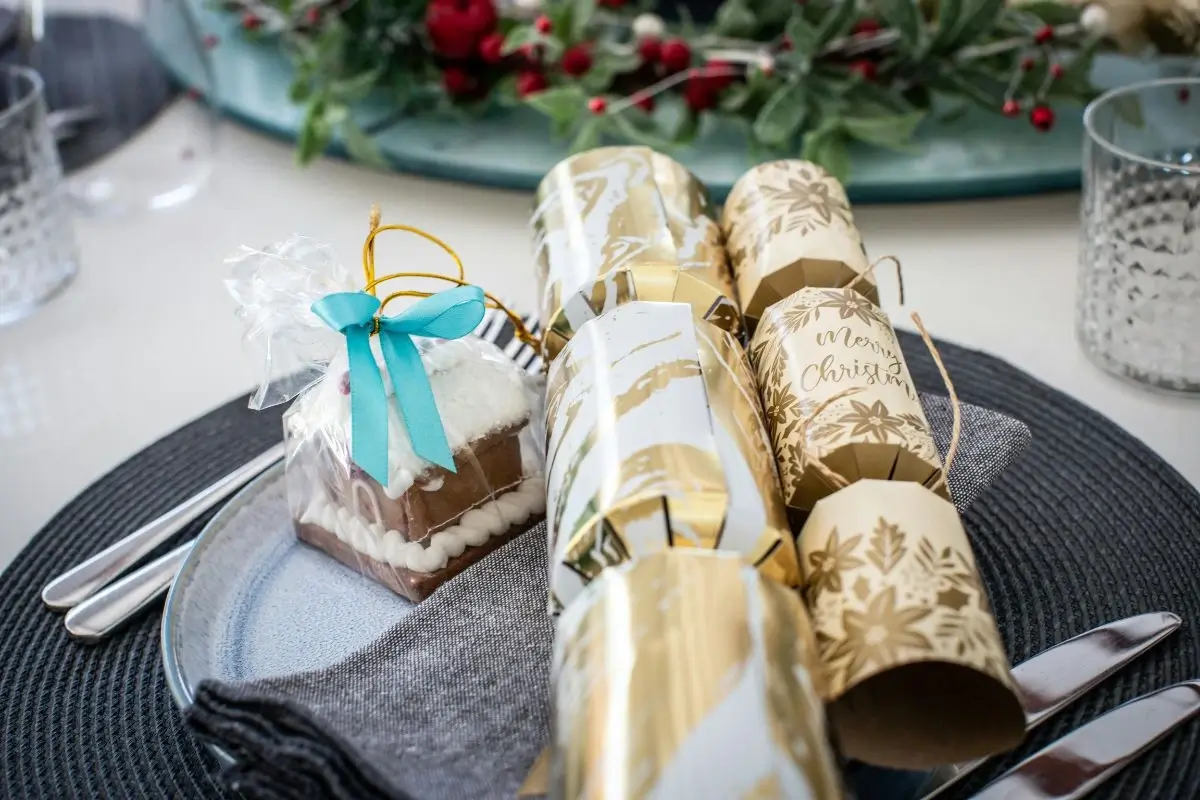
The presentation box is often the first part a shopper sees and the last part a buying team designs. Reverse that order. Decide the number of crackers per pack, shelf orientation, viewing window, opening experience, protective inserts and information panels during product development.
Ask for dielines and a blank structural sample before final artwork. Check that crackers do not move excessively, ends are not crushed, ribbons are not trapped and the box can be assembled consistently. For e-commerce, test the retail pack inside its shipping parcel rather than assuming shelf packaging is courier-ready. Explore structures on the custom Christmas cracker packaging page.
Use a Four-Stage Approval Process
- Concept approval: confirms the commercial direction, range architecture and indicative materials.
- Digital artwork approval: confirms copy, logos, layout, dielines and colour references.
- Physical sample approval: checks construction, scale, finish, gift fit, packaging and overall presentation.
- Production standard: records the approved sample and written tolerances that the line and inspector must follow.
A beautiful handmade sample may use processes that differ from mass production. Ask the factory to state which features of the sample are representative and which will change on the production line. If a bespoke gift is not ready, approve it separately and confirm a final fit sample before assembly.
Make Compliance Part of the Design
Product safety, warnings and traceability cannot be added reliably after all artwork panels are full. Determine the destination-market requirements during the brief. For Great Britain, official guidance says businesses making, importing, distributing or selling consumer products are responsible for safety, and importers may have additional obligations for conformity, documentation, identification and labelling.
If a gift is a toy, review the current Great Britain toy-safety guidance and obtain competent advice for the particular item. Ensure reports and declarations identify the actual model and production version.
Sustainability claims also require evidence. If the product is to carry an FSC label or be promoted as FSC certified, check chain-of-custody status, transaction claims and trademark approval for the actual product. Avoid broad phrases such as “fully sustainable” unless every part of the statement can be substantiated.
Plan Production and Quality Control
After approval, freeze a bill of materials and specification containing component codes, dimensions, colours, artwork versions, pack counts and carton marks. Use production milestones for paper, printed components, gifts, assembly and packing. Any substitution should require written approval.
Inspection should cover more than appearance. Check assortment, dimensions, artwork, finishes, pull function, correct contents, retail-pack assembly, barcode readability and carton condition against agreed criteria. Keep production samples for traceability and repeat-order comparison.
Optimise for Container Loading
Cracker length and retail-box geometry determine how much air is shipped. Before the box artwork is final, request proposed master-carton dimensions and estimated container loading. A small structural adjustment may improve utilisation without changing the customer-facing design.
Container-load programmes generally support better control of handling and consolidation. For qualified volumes below a full container, discuss assembled and flat-packed possibilities, local assembly capability and transport risks through the flexible-volume order route. The right answer depends on the finished product and package, not a universal quantity rule.
Avoid These Customisation Mistakes
- Starting artwork before choosing the gift and pack count.
- Using low-resolution logos or unlicensed images.
- Approving colour only on a computer screen.
- Adding too many finishes without a clear visual hierarchy.
- Leaving legal, importer and barcode panels until the final revision.
- Requesting a unique structure when custom artwork on a proven format would meet the objective.
- Changing components after the approved sample without revising the specification.
- Ignoring master-carton and container efficiency until production is complete.
Start Your Custom Christmas Cracker Brief
Send JollyCracker your brand guidelines, destination, delivery window, expected volume, preferred cracker style, gift idea and retail-pack requirements. We will review design, manufacturing, compliance preparation and loading as one programme, then identify the information required for an accurate quotation and sample plan.