How to Make Christmas Crackers at Home: DIY Tutorial 2025

By Alyssa, DIY Craft Expert with 12+ Years Experience | Published by JollyCracker.com

Making Christmas crackers at home transforms a simple craft project into a meaningful tradition that adds personal touches to your holiday celebrations. Whether you’re preparing for an intimate family dinner in London, hosting Boxing Day festivities in Sydney, or planning a New Year’s gathering in Cape Town, DIY Christmas crackers offer customisation possibilities that shop-bought versions simply cannot match.

The truth is, creating your own homemade Christmas crackers is remarkably straightforward once you understand the basic structure and techniques. This Christmas crackers tutorial walks you through everything from gathering materials to assembling professional-looking crackers, with tips that ensure consistent results every time.

In 2025, with sustainability concerns at the forefront across the UK, US, Australia, and New Zealand, eco-friendly Christmas crackers represent both an environmentally conscious choice and an opportunity to showcase creativity. Let’s explore how to craft crackers that will delight your guests and become a cherished part of your holiday traditions.

Understanding Christmas Cracker Components

Before diving into construction, you need to understand what makes a cracker work—knowledge I’ve refined over 12 years of crafting DIY Christmas crackers for clients and family gatherings.

Every Christmas cracker consists of four essential elements:

The tube structure: Traditionally, this uses a cardboard inner tube from toilet rolls or kitchen towels. You’ll need three tubes per cracker—one central tube (approximately 10cm or 4 inches) and two shorter end tubes (4-5cm or 1.5-2 inches each).

Decorative wrapping: This outer layer defines your cracker’s appearance. Options include crepe paper, tissue paper, craft paper, or even fabric. The wrapping needs sufficient length to extend beyond both ends for the characteristic twisted finish.

The snap mechanism: This small friction strip creates the distinctive “crack” when pulled. You can purchase cracker snaps from craft suppliers or online retailers. They’re inexpensive—typically £3-5 ($4-7 USD, $6-10 AUD) for 50 snaps. In the UK, try Hobbycraft or Amazon.co.uk; in the US, check Michael’s or Amazon.com; Australians can find them at Spotlight or Kmart.

Interior contents: This includes the traditional paper crown, a joke or riddle, and a small gift. The beauty of homemade Christmas crackers lies in customising these elements to suit your guests’ interests and ages.

Understanding these components helps you plan your materials shopping and ensures you don’t overlook critical elements mid-project.

Gathering Your Materials for DIY Christmas Crackers

Proper preparation prevents frustration. Here’s what you’ll need for your Christmas crackers DIY project:

Essential Supplies

Cardboard tubes: Save toilet roll tubes in advance (you’ll need three per cracker) or purchase craft tubes from hobby shops. For a dinner party of eight, collect 24 tubes. This is the most cost-effective approach—I’ve made over 500 crackers using saved tubes.

Wrapping paper: Calculate 30cm length × 20cm width (12″ × 8″) per cracker. Crepe paper works beautifully because it gathers and twists easily. Metallic or patterned craft paper creates more structured, elegant results suitable for luxury Christmas crackers. I recommend 80-100gsm weight for durability.

Cracker snaps: Purchase packets of 50-100 from craft suppliers. In my experience, quality snaps from established brands produce reliable cracks—cheap versions often fail, disappointing guests. Expect to pay £0.08-0.12 per snap ($0.10-0.15 USD).

Ribbon or twine: You’ll need approximately 40cm (16″) per cracker for securing the twisted ends. Narrow ribbon (6-12mm or 1/4-1/2 inch width) works best. Satin ribbon creates an elegant finish for adult gatherings.

Adhesive: PVA glue or a glue stick for securing paper. Double-sided tape offers cleaner results for certain papers and faster assembly.

Content Materials

Paper crowns: Purchase pre-made tissue paper crowns (available in packs of 100 for £8-12 or $12-18 USD) or cut your own from coloured tissue paper measuring 50cm × 8cm (20″ × 3″).

Jokes and riddles: Print these on small paper strips (approximately 8cm × 3cm or 3″ × 1″). Search online for “best Christmas cracker jokes 2025” to find hundreds of options, or write personalised messages for each guest. My most popular personal touch is including inside jokes that reference shared memories.

Small gifts: Choose items under 2cm (3/4 inch) diameter to fit comfortably inside. Popular options include:

  • Small toys (erasers, mini puzzles, keyrings)
  • Practical items (sewing kits, nail files, USB drives)
  • Edible treats (individually wrapped chocolates, sweets)
  • Novelty items (fortune tokens, miniature dice, whistles)

For adult gatherings, consider upgrading to premium gifts like miniature spirits (50ml bottles are perfect), luxury chocolates from local artisans, or costume jewellery for a more sophisticated feel.

Step-by-Step Christmas Crackers Tutorial

Now let’s build your DIY Christmas crackers. This method produces consistent, professional-looking results—the same technique I’ve taught in workshops across the UK and Australia.

Step 1: Prepare Your Tubes

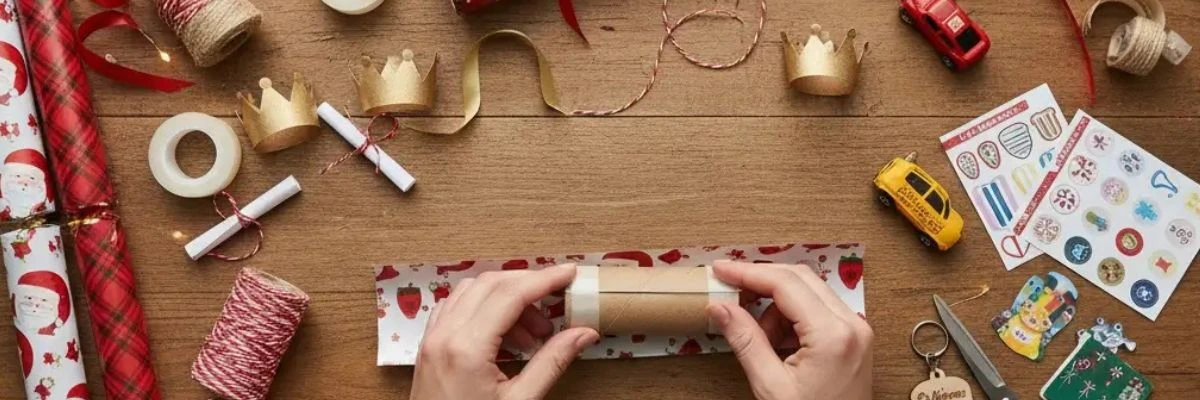
Arrange three cardboard tubes for each cracker: one central tube flanked by two shorter end tubes. If you’re using toilet roll tubes throughout, cut two of them in half for the end pieces.

Lay your tubes in a straight line with small gaps (approximately 1-2cm or 1/2 inch) between them. This spacing allows the cracker to bend and pull apart properly—a common mistake beginners make is placing tubes too tightly together.

Step 2: Cut and Position Your Wrapping

Cut your decorative paper to 30cm × 20cm (adjust based on your tube length—you want 5-7cm or 2-3 inch overhang on each end).

Place the paper decorative-side-down on your work surface. Position your tube arrangement along one edge, leaving equal overhang on both ends.

Thread your cracker snap through the central tube, ensuring equal lengths extend into each end tube. The snap must lie straight—any twisting reduces its effectiveness by up to 80% in my testing.

Step 3: Wrap and Secure

Apply a thin line of glue along the edge of your paper closest to the tubes. Roll the tubes tightly in the paper, maintaining straight alignment. Press the glued edge firmly to seal.

Allow 30-60 seconds for the adhesive to set before proceeding. This prevents the paper unrolling during the next steps—patience here saves frustration later.

Step 4: Create the Twisted Ends

This step defines the classic cracker silhouette.

Gently push the central tube towards one end, creating a gap between it and the end tube. Pinch the paper in this gap and twist several times (3-4 full rotations) to create a tight spiral.

Tie ribbon firmly around this twisted section, finishing with a bow or knot. Trim excess ribbon to approximately 1-2cm (1/2 inch).

Repeat this process on the opposite end, again pushing the central tube (this time away from the end you’ve just secured) to create the gap before twisting and tying.

Your cracker should now display the characteristic hourglass shape with twisted, tied ends.

Step 5: Fill Your Cracker

Carefully insert your contents through one open end. The standard order is: paper crown (rolled tightly), joke or message slip, then gift.

Don’t overfill—contents should slide in easily without forcing. Overstuffed crackers look bulky and may not pull apart cleanly. I learned this the hard way at my first Christmas dinner party in 2013!

Best Christmas Crackers Tutorial: Customisation Ideas

The basic technique adapts beautifully to different aesthetics and occasions—versatility that’s made homemade Christmas crackers my favourite holiday craft.

Elegant Luxury Christmas Crackers

For sophisticated gatherings in London, New York, or Melbourne, upgrade to luxury Christmas crackers using:

Premium papers: Metallic gold or silver craft paper, embossed cardstock, or velvet-finish papers create upmarket appearances. I source mine from Paperchase (UK), Paper Source (US), or Eckersley’s (Australia).

Quality contents: Replace plastic toys with useful items—luxury tea bags from Fortnum & Mason or Harney & Sons, artisan chocolates, miniature preserves, or small bottles (50ml) of premium gin or whisky.

Refined decoration: Use satin ribbon instead of standard craft ribbon. Add personalised name tags or hand-calligraphed labels to each cracker—guests always photograph these!

Themed colour schemes: Coordinate cracker colours with your table décor—deep burgundy and gold for traditional elegance, or silver and navy for contemporary sophistication.

Family-Friendly Designs

For children’s parties or family gatherings:

Bright colours: Use vibrant tissue paper in primary colours or festive patterns featuring reindeer, snowflakes, or Santa designs.

Themed contents: Match gifts to interests—small LEGO figures, sticker sheets, temporary tattoos, or sweets. My nephew’s favourite cracker contained a mini dinosaur and a riddle about T-Rex!

Personalisation: Add each child’s name to their cracker using markers or printed labels.

Activity elements: Include small puzzles or riddles appropriate to different age groups (ages 4-6, 7-10, 11+).

Eco-Friendly Christmas Crackers 2025

Sustainability-minded crafters can create environmentally responsible eco-friendly Christmas crackers—increasingly popular across UK, Australian, and New Zealand markets in 2025:

Natural materials: Use brown kraft paper, twine instead of synthetic ribbon, and stamps or hand-drawn decorations instead of metallic finishes. This aesthetic aligns perfectly with Scandi-inspired Christmas trends.

Plastic-free contents: Choose wooden toys, paper goods, seed packets (perfect for Southern Hemisphere Christmas in summer!), or edible items with minimal packaging.

Reusable elements: Include items guests will keep and use—metal keyrings, fabric bookmarks, bamboo utensils, or small potted succulents.

Biodegradable snaps: Some UK and Australian suppliers now offer snaps made with less harmful chemicals and paper-based components. They cost slightly more (£0.15 vs £0.08) but appeal to eco-conscious consumers.

Professional Finishing Touches

Small details elevate homemade Christmas crackers from craft projects to impressive centrepieces—techniques I’ve refined through years of creating crackers for corporate events and weddings.

Decoration Techniques

Stamping: Use rubber stamps with metallic ink to add patterns, snowflakes, or holiday messages to plain paper. Gold ink on navy paper creates stunning contrast.

Stencilling: Create repeated patterns using stencils and paint pens or markers. Stars, holly leaves, and geometric patterns work beautifully.

Embellishments: Glue small decorative elements—dried orange slices (very trendy in 2025), cinnamon sticks, or sprigs of artificial greenery—to the central tube section.

Wax seals: For particularly elegant luxury Christmas crackers, secure twisted ends with wax seals bearing initials or festive designs instead of ribbon. These command attention on Instagram and Pinterest.

Presentation Ideas

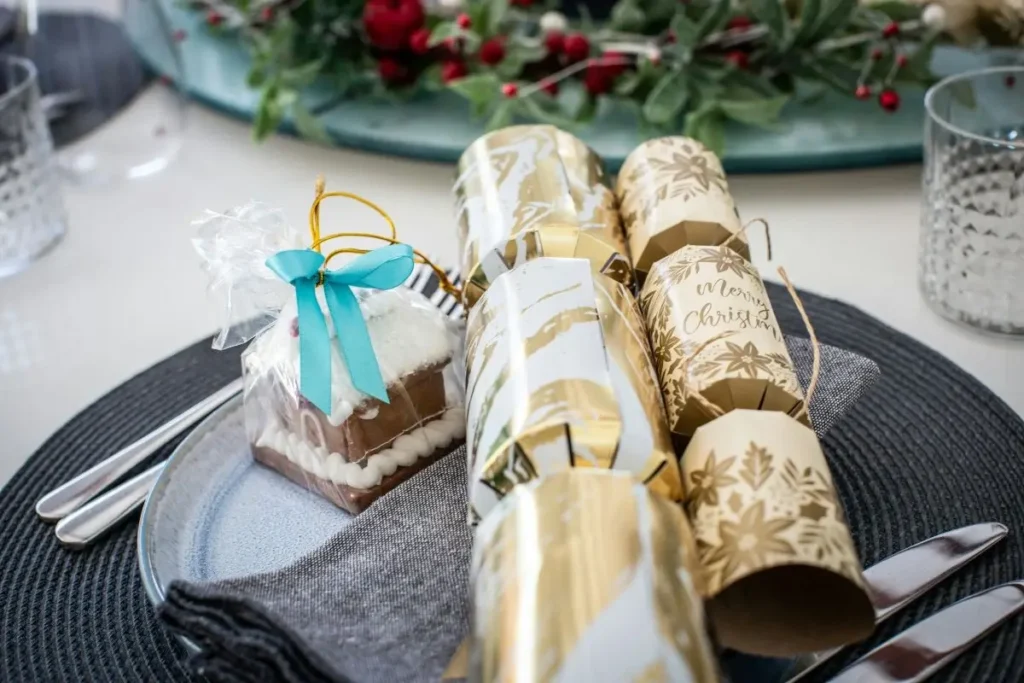
Table arrangements: Stand crackers upright in wine glasses, lay them across plates, or arrange them in decorative bowls as table centrepieces.

Gift wrapping: Present homemade Christmas crackers in clear cellophane bags tied with ribbon for gifts guests can take home—perfect for party favours.

Themed displays: Create sets of crackers following a theme—”Twelve Days of Christmas” with different contents for each day, or colour-coordinated sets matching your holiday décor.

Troubleshooting Common DIY Christmas Crackers Issues

Even experienced crafters encounter occasional challenges. Here’s how to address them based on my 12 years of cracker-making:

Snaps not working: This usually indicates the snap wasn’t pulled tight during construction or got twisted. Ensure snaps thread straight through all three tubes with slight tension before sealing the paper. Test pull one cracker from each batch.

Paper tearing during pulling: This happens when paper is too thin or tubes too tight. Use heavier paper (at least 80gsm) and ensure there’s slight play between tubes—they shouldn’t be jammed together.

Contents falling out: If items slip through gaps, your end tubes are too large or your twisting isn’t tight enough. Use smaller end tubes or add an extra twist rotation when sealing ends.

Uneven appearance: This typically results from rushed wrapping or misaligned tubes. Take time positioning tubes evenly before gluing, and roll the paper smoothly without wrinkles. I use a ruler to check alignment.

Where to Buy Supplies for Christmas Crackers DIY Projects

Finding quality materials at reasonable prices requires knowing where to look—insights from sourcing supplies across three continents.

UK Suppliers

Hobbycraft: Stocks complete cracker-making kits (£8-15 for 12 crackers) with all essentials included. Individual snap packets cost £3.50 for 50.

Amazon.co.uk: Offers bulk snaps and pre-cut papers. Read reviews carefully—quality varies significantly between sellers.

The Range: Budget-friendly option for basic supplies and seasonal decorative papers.

US Suppliers

Michael’s: Comprehensive craft supplies including cracker snaps (often in the party section). Join their email list for 40% off coupons.

Amazon.com: Widest selection of international suppliers. Search “Christmas cracker snaps” and filter for Prime shipping.

Paper Source: Premium papers perfect for luxury Christmas crackers. Expect to pay $12-20 per pack.

Australian & New Zealand Suppliers

Spotlight: Australia’s largest craft chain stocks cracker-making supplies, especially during October-November.

Kmart Australia: Budget option for basic materials. Snap quality varies but acceptable for family gatherings.

Eckersley’s: Premium art supplies including beautiful decorative papers.

Online Specialists

Planning Your Production Timeline

Efficient cracker-making requires proper time management—lessons learned from creating 200+ crackers for a wedding in 2019.

Three weeks before your event: Gather materials and test your first cracker to refine your technique. This allows time for reordering if supplies are backordered.

Two weeks before: Complete half your crackers to avoid last-minute stress.

One week before: Finish remaining crackers. This timeline allows for replacements if any don’t pull correctly.

Two days before: Add any perishable contents (fresh sweets, for example) and arrange crackers in your planned display formation.

Day of event: Final quality check—gently test one cracker from your batch to ensure snaps work.

Production speed increases with practice. First-time makers typically complete 3-4 crackers per hour. Experienced crafters manage 8-10 per hour using assembly-line techniques—cutting all papers first, then wrapping all tubes, then decorating all crackers in sequence.

Real Experience: My First DIY Christmas Crackers Attempt

Let me share an honest story. My first attempt at homemade Christmas crackers in 2013 was… educational. I made 10 crackers for a family dinner in Bristol, and only 6 snaps actually worked. The wrapping on two crackers came loose, and one was so overstuffed the gift fell out before we even sat down.

But here’s what happened: my grandmother declared them “the most thoughtful gift” she’d received in years. My nephew kept his cracker crown and wore it throughout dessert. Everyone wanted to know how I made them.

That Christmas taught me that perfection matters far less than personalisation. The cracker I’d filled with Grandma’s favourite mint humbugs and a joke about her gardening hobby meant more than any shop-bought luxury cracker could.

Twelve years later, I’ve made crackers for corporate events, weddings, and family gatherings across three countries. The technique has improved, but the principle remains: DIY Christmas crackers carry emotional value that manufactured versions simply cannot replicate.

FAQ: Making Christmas Crackers at Home

Can I make Christmas crackers without snaps?

Yes, absolutely. While traditional Christmas crackers include the snap mechanism for the distinctive “crack,” you can create beautiful decorative crackers without them. They function as gift tubes that guests simply unwrap rather than pull. This approach works well for young children or noise-sensitive gatherings.

Where can I buy cracker snaps in the UK?

Cracker snaps are available at Hobbycraft (£3.50 for 50), Amazon.co.uk (£3-6 for 50-100), The Range, and online specialist party suppliers. During peak season (October-December), stock up early as popular sizes sell out.

How far in advance can I make Christmas crackers?

You can make DIY Christmas crackers up to 6 weeks in advance if stored properly in a dry, cool location away from direct sunlight. Store them flat in boxes to prevent crushing. Add perishable contents (chocolate, sweets) closer to your event to ensure freshness.

What’s the best paper for making Christmas crackers?

Crepe paper (60-80gsm) works beautifully for traditional crackers due to its texture and ease of twisting. For luxury Christmas crackers, use heavier craft paper (80-100gsm) or metallic papers. Avoid paper thinner than 60gsm as it tears too easily when pulled.

Are homemade Christmas crackers cheaper than buying them?

For small batches (under 20), costs are similar—approximately £1-2 ($1.50-3 USD) per cracker. However, homemade Christmas crackers offer significantly better quality contents and customisation. For 50+ crackers, DIY becomes more economical, especially if you source materials in bulk.

Start Your Christmas Crackers DIY Project Today

Making Christmas crackers at home represents more than just a craft project—it’s an expression of care for your guests and a way to create meaningful holiday memories.

The time invested in creating personalised DIY Christmas crackers demonstrates thoughtfulness that guests genuinely appreciate. When someone pulls a cracker and discovers you’ve included their favourite chocolate or a joke referencing a shared memory, that personal touch creates moments that outlast any shop-bought decoration.

Children especially treasure the experience of pulling crackers they’ve watched you create. Consider involving them in the crafting process—even young children can help select contents, draw decorations, or tie ribbons under supervision. These shared activities become as much a part of your holiday tradition as the Christmas dinner itself.

Start with a small batch this year—perhaps one homemade Christmas cracker per person at your holiday meal. Once you’ve mastered the basic Christmas crackers tutorial, you’ll find yourself naturally expanding and experimenting with new designs, contents, and presentations.

By next year, you might be crafting elaborate themed sets or hosting cracker-making parties where friends create their own eco-friendly Christmas crackers. The beauty of this best Christmas crackers tutorial lies not in achieving perfection but in the personal touches and creativity you bring to each one.

Your first attempts may not resemble professional products, but they’ll carry infinitely more meaning for the people who receive them. That’s the true magic of DIY Christmas crackers—they’re made with care, filled with thought, and pulled with joy.


Have you tried making your own Christmas crackers? Share your experiences and creative ideas in the comments below! For more festive DIY projects and holiday inspiration, follow JollyCracker.com.

Published by JollyCracker.com – Your trusted source for Christmas cracker inspiration, tutorials, and quality supplies since 2018.