WHOLESALE MATERIALS & CLAIMS
What Makes a Christmas Cracker Eco-Friendly?
An environmental direction must be defined component by component. Wholesale buyers should review the paper and board, print and finishes, ties and decorations, gifts, retail packaging, transport protection and the evidence supporting each customer-facing claim. A kraft appearance, wooden gift or FSC reference does not by itself describe the complete product.
1. Define the Environmental Objective
Begin with the buyer's policy and intended market. The project may aim to use specified paper, reduce avoidable plastic, improve separation for disposal, right-size packaging or replace selected gifts. These are different objectives and should not be merged into one unsupported label.
2. Review FSC Scope and Chain of Custody
FSC labels and claims are controlled. Buyers should identify which paper or board components are intended to carry a claim, confirm the relevant certified supply route and approve the exact artwork wording before print. A supplier's certification should not be interpreted as proof that every material or finished product automatically qualifies.
Request the current certificate details and confirm the proposed label or promotional claim through the applicable approval process. See the official FSC chain-of-custody overview and discuss product options through the eco-friendly Christmas cracker supply page.
3. Plan Plastic Reduction Across the Product
List every plastic-containing component rather than focusing only on the visible gift. Possible review points include a retail window, inner tray, film, tape, ribbon, decorative laminate, gift material and protective packing. Removing one component can change visibility, strength, moisture resistance or transit protection, so the revised structure should be sampled and tested.
Gift directions to evaluate
- Paper or card games, bookmarks, puzzles and printed activities
- Wooden items with defined material, treatment, finish and intended age group
- Reusable metal or textile accessories where dimensions and safety are suitable
- Seed, food, cosmetic or natural-material items only after category-specific shelf-life, import, labelling and product checks
Material alone does not establish suitability. A wooden item can still have small parts or surface-treatment requirements; a seed item can have destination restrictions; food and cosmetic products require their own review.
4. Develop Packaging Around the Approved Product
A window-free carton may reduce mixed materials but provide less product visibility. A paper-based window or alternative film still requires its composition, disposal route and performance to be verified. Coatings, laminates, adhesives, labels and decorative finishes can affect the claim buyers intend to make.
Develop the retail pack and transport carton around the finished cracker and gift. Use the custom packaging programme to compare structures, protection and labelling requirements.
5. Connect Each Claim to a Specification and Evidence File
Proposed directionSpecification to confirmEvidence or approval to retain
FSC-labelled paper componentIncluded paper or board, material reference and artworkApplicable supplier information and label approval
Plastic-reduced packBaseline and revised bill of materialsApproved samples and component records
Recyclability statementFull composition, coatings, labels and separabilityDestination guidance and buyer review
Paper or wooden giftMaterial, treatment, function, size and age groupProduct information and applicable assessment records
Right-sized packagingPack dimensions, product protection and carton planApproved pack sample and transit review
Use narrow, factual wording that matches the approved version. Avoid implying that one component proves the environmental performance of the whole cracker. Buyer-facing claims should be reviewed against the destination market and retailer policy before artwork approval.
6. Do Not Judge Environmental Performance by Appearance Alone
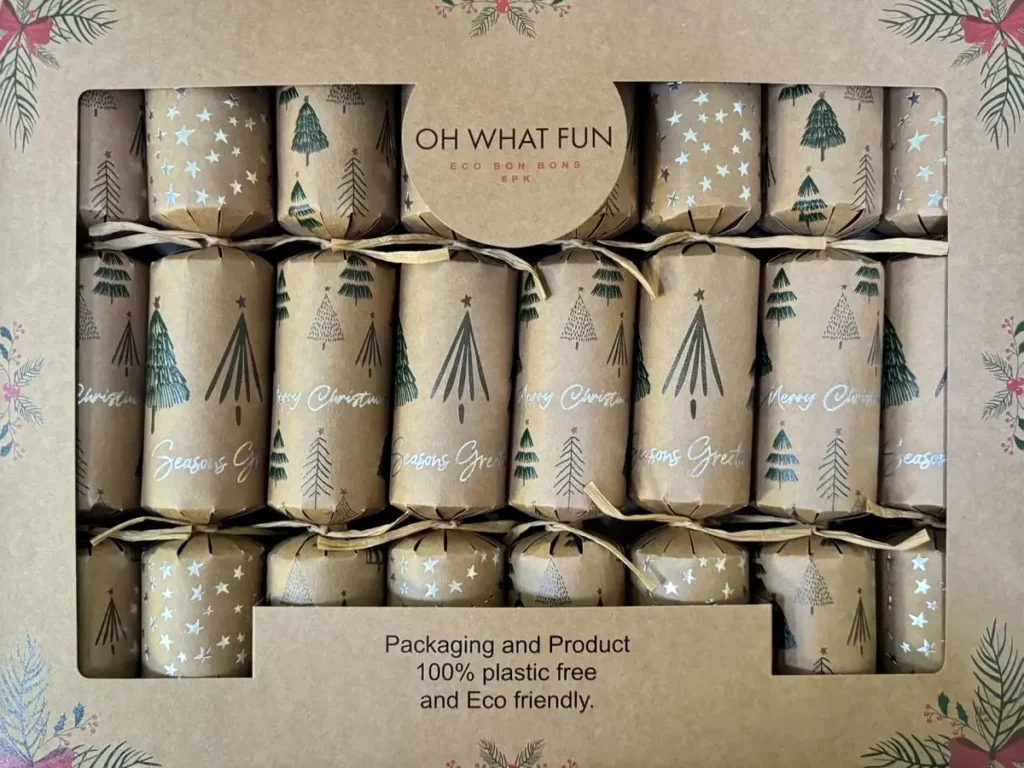
- Kraft colour does not prove recycled content, certified sourcing or recyclability.
- A metallic appearance does not identify the underlying material or disposal route.
- Paper packaging may include coatings, laminates, windows, adhesives or labels that require review.
- “Plastic-free” needs a defined scope covering the cracker, gift, decoration and packaging.
- “Compostable” requires material-specific evidence and appropriate disposal conditions.
- A reusable gift still needs to be suitable, functional and documented for the intended market.
7. UK Plastic Packaging Tax: Buyer Checks
Rates, thresholds and guidance can change. UK importers should use current HMRC information and professional advice for the actual packaging and reporting period instead of relying on a fixed figure in a seasonal buying guide.
- Identify plastic packaging components and their weights.
- Confirm recycled-content information and supporting records.
- Establish who is the importer or responsible business.
- Check the current threshold, rate, exemptions and record-keeping rules.
- Keep the tax review separate from broader environmental marketing claims.
Refer to current HMRC Plastic Packaging Tax guidance.
8. Sample and Document the Complete SKU
- Set priorities. Record the target market, retailer policy and components in scope.
- Review options. Compare paper, decoration, gifts, packaging and protection as one product.
- Approve samples. Check appearance, fit, function, packing and separation assumptions.
- Approve wording. Match artwork claims and disposal instructions to the approved components.
- Record the version. Retain the specification, bill of materials, relevant documents and approvals for production and inspection.
Eco-Friendly Christmas Cracker Buyer Brief
- Destination country and buyer or retailer environmental policy
- Environmental objective and components included in the claim
- Required paper, board or certification direction
- Plastic components to reduce, replace or retain for protection
- Gift category, intended audience and age group
- Retail-pack format, window, labels and disposal wording
- Estimated quantity, number of SKUs and target receipt date
- Documents, samples, inspections and approval contacts
Coordinate custom gifts and fillers, private-label artwork and packaging, and factory production controls before releasing the final specification.
Eco-Friendly Christmas Cracker FAQs
Does kraft paper mean a cracker is eco-friendly?
No. Colour and texture do not establish paper source, recycled content, coatings, recyclability or the composition of the full product.
Can FSC paper be used for wholesale Christmas crackers?
FSC material directions may be available, but the component scope, certified supply route, label use and artwork wording must be confirmed for the approved product.
Does a supplier certificate cover every finished cracker?
No. Certification scope and claim eligibility should be checked for the specific materials, product route and artwork.
Can plastic be removed from retail packaging?
Plastic-reduced and window-free structures can be evaluated, subject to product visibility, protection, packing performance and the buyer's requirements.
Are paper and wooden gifts automatically suitable for children?
No. Material is only one consideration. Dimensions, small parts, treatment, finish, function, intended age and applicable requirements must also be reviewed.
Can the box say “100% recyclable”?
Only use a claim whose scope is clear and supported for the complete approved packaging in the destination market. Mixed components, coatings, labels and local collection systems may affect the wording.
Is the UK Plastic Packaging Tax rate fixed?
No. Importers should check current HMRC rates, thresholds, exemptions and record-keeping requirements for the relevant accounting period.
Prepare an Environmental Product Brief
Share the market, buyer policy, material restrictions, gift direction, packaging structure, quantity plan and claims you need to support.
Discuss Your Eco Brief