Whether you’re a retail chain buyer in the UK, a corporate event planner in Australia, or an Amazon FBA seller looking for your next winning Q4 product — sourcing custom Christmas crackers from a manufacturer can feel overwhelming if you’ve never done it before.
How do you pick the right cracker style? What goes inside them? How does the packaging work? What’s the minimum order? And how long does the entire process actually take?
This guide answers every question wholesale buyers ask when sourcing Christmas crackers for the first time — from choosing your design all the way to receiving your shipment.
Let’s break it down step by step.
1. Understanding Christmas Cracker Types: Which One Fits Your Market?
Not all Christmas crackers are created equal. The style you choose should depend entirely on your target customer and retail channel.
Here are the four main categories that drive the global market:
Luxury Christmas Crackers
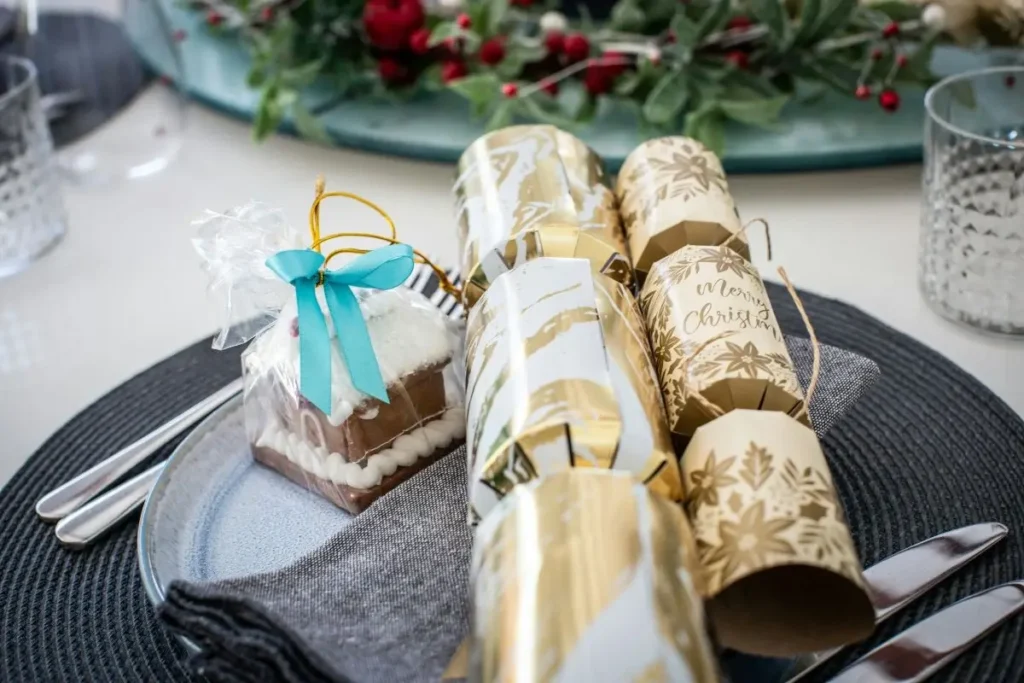
Luxury Christmas crackers are designed for high-end retailers, department stores, and premium gift hampers. They feature embossed finishes, metallic foil stamping, rigid gift box packaging, and premium filler gifts such as mini spirits, beauty accessories, or artisan chocolates.
If your customers are willing to pay £20–£50+ per box, this is your category. The UK market, in particular, has massive demand for luxury Christmas poppers — especially from brands competing with the likes of John Lewis and Fortnum & Mason.
Traditional Christmas Crackers
The classic red-and-green traditional cracker remains an unbeatable volume seller. These are the British Christmas crackers that families pull at the dinner table — complete with a paper crown, a printed joke, and a snap.
Traditional crackers sell well in supermarkets, family restaurants, and hospitality settings. They’re also the most cost-effective option for wholesale Christmas crackers buyers looking to maximise margins.
Party Crackers
Party crackers are designed for events, weddings, New Year’s celebrations, and children’s parties. They tend to feature brighter colours, fun themes, and more interactive filler gifts like mini puzzles, temporary tattoos, or small toys.
In Australia and New Zealand, these are commonly known as Christmas bon bons — a term that’s essential to include in your product listings if you’re selling into that market.
Eco-Friendly Christmas Crackers
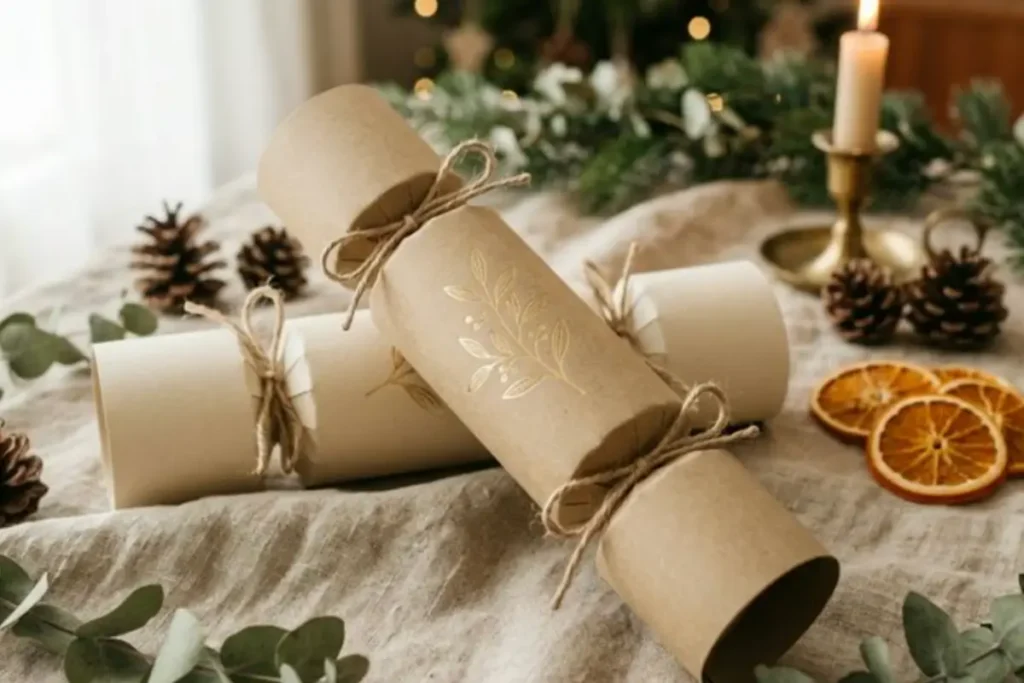
The fastest-growing segment in the industry. Eco-friendly Christmas crackers use FSC-certified paper, soy-based inks, plastic-free filler gifts (think seed packets, beeswax wraps, or wooden toys), and fully recyclable packaging.
If your retail partners have ESG mandates or your brand targets eco-conscious consumers, this isn’t optional — it’s expected. The good news? FSC-certified kraft paper now costs only 5–8% more than conventional stock, making the switch commercially viable even for price-sensitive channels Learn more about FSC certification for paper & packaging.
2. Choosing the Right Cracker Fillers: What Makes Customers Choose YOUR Crackers?
The cracker itself may catch the eye, but it’s the gift inside that determines whether a customer buys yours over a competitor’s. The global trend is unmistakable: buyers are moving away from cheap plastic toys and towards fillers that feel premium, useful, or sustainable.
Here are the four filler categories that consistently perform best for wholesale buyers:
- Classic Fillers: Mini toys, word puzzles, printed jokes, paper crowns. Still the default for mass-market and family-oriented traditional crackers.
- Gourmet Fillers: Artisan chocolates, luxury sweets, specialty teas. Ideal for Christmas crackers with good gifts that retail at a mid-to-premium price point.
- Premium Fillers: Miniature spirits (gin, whisky), beauty products (lip balm, hand cream), branded accessories. The gold standard for luxury crackers and corporate gifting.
- Eco-Friendly Fillers: Seed packets, bamboo utensils, beeswax food wraps, reusable shopping bags. Perfect for brands marketing sustainability. Working with a manufacturer that offers holiday gift sourcing services allows you to curate exactly the right mix for your audience.
Pro tip: The best Christmas crackers on the market in 2026 combine a thoughtful filler with packaging that tells a story. Don’t treat the gift as an afterthought — it’s your silent salesperson.
3. The Art of Packaging: Why It’s as Important as the Cracker
Your cracker could be perfect inside. But if the packaging doesn’t stop someone in the aisle, it stays on the shelf.
After working with hundreds of retail buyers, we’ve seen the same pattern: brands that outsell competitors by 2–3x aren’t always making a “better” cracker. They’re making better packaging.
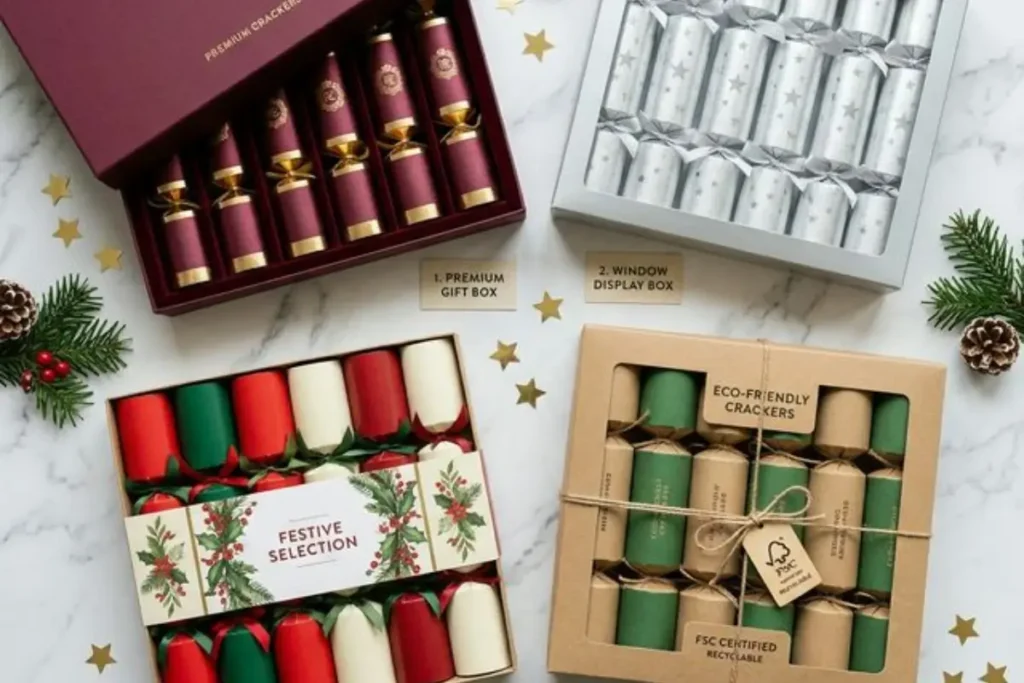
Here are the four custom packaging styles that dominate the wholesale market:
| Packaging Style | Best For | Key Benefit |
|---|---|---|
| Window Display Box | Premium retailers, gift shops | Consumers can see the product quality before buying |
| Rigid Gift Box | Corporate gifts, luxury hampers | Heavy and tactile — screams “premium” on contact |
| Printed Sleeve / Wrap | Supermarkets, Amazon FBA | Cost-effective with maximum shelf impact |
| Eco Kraft Box | Health-conscious brands, organic stores | FSC-certified, recyclable, sustainability positioning |
The critical takeaway? Packaging isn’t an afterthought — it’s a strategic lever. The right box can move your Christmas crackers from the “budget” shelf to the “gift” shelf, dramatically increasing your margin per unit.
4. MOQ Demystified: How Many Crackers Do You Actually Need to Order?
“What’s your MOQ?” is the question every wholesale buyer asks first. And the answer isn’t as simple as a single number.
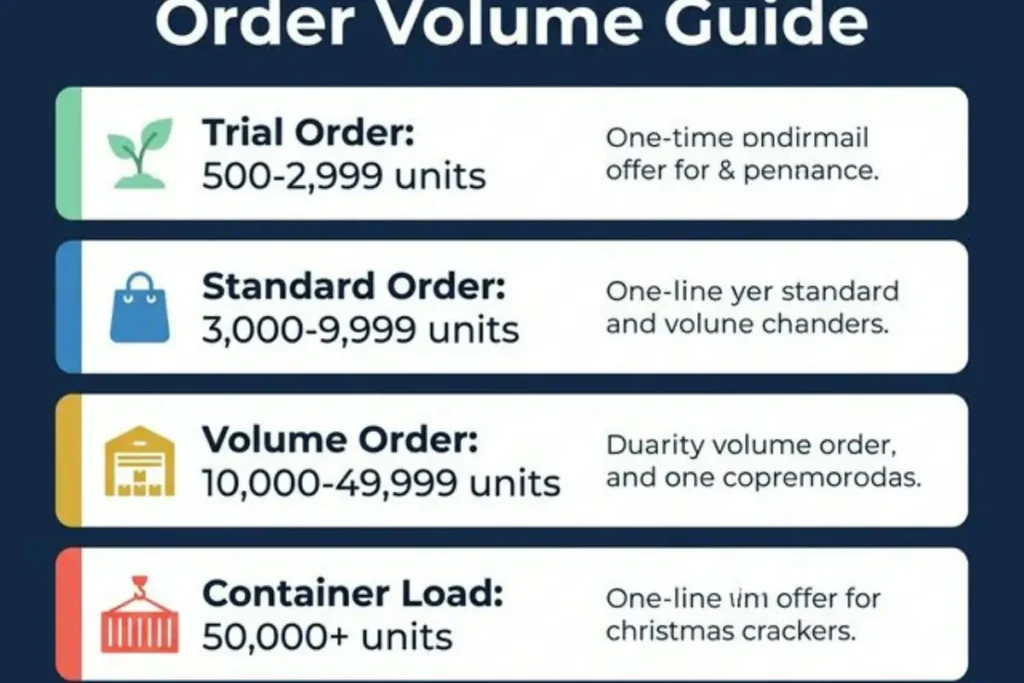
Here’s how order volumes typically work when sourcing from a custom Christmas crackers manufacturer:
Qualified Below-Container Project
Perfect for testing a new market, validating a design, or placing your first-ever order. Per-unit cost is slightly higher (you’re paying for flexibility), but physical sample approval is included before production begins.
Scalable B2B Program
Suitable for qualified professional buyers once artwork, packaging, fillers, cartons and the shipping method have been reviewed together. Full customisation is available, and better per-unit pricing kicks in.
Volume Order: 10,000–49,999 Units
Significant cost savings (typically 20–35% lower than trial pricing). You get dedicated production line scheduling and priority quality control inspection.
Container Load: 50,000+ Units
The best factory-direct pricing available — maximum margin for your business. A standard 20ft container fits approximately 15,000–20,000 standard crackers, while a 40ft container fits 30,000–40,000 units. Volume order buyers at this level receive end-to-end logistics support.
The key message? Container-load programs provide the best protection and planning efficiency. Request a product-specific review for a qualified below-container project. Test your market. Validate the design. Then scale up when demand confirms it. That’s how smart buyers de-risk their holiday product line.
5. The Complete Production Process: From Inquiry to Delivery
Understanding what happens behind the scenes — from the moment you send your first inquiry to the day your crackers land at your warehouse — removes uncertainty and helps you plan your timeline.
Here’s the step-by-step journey:
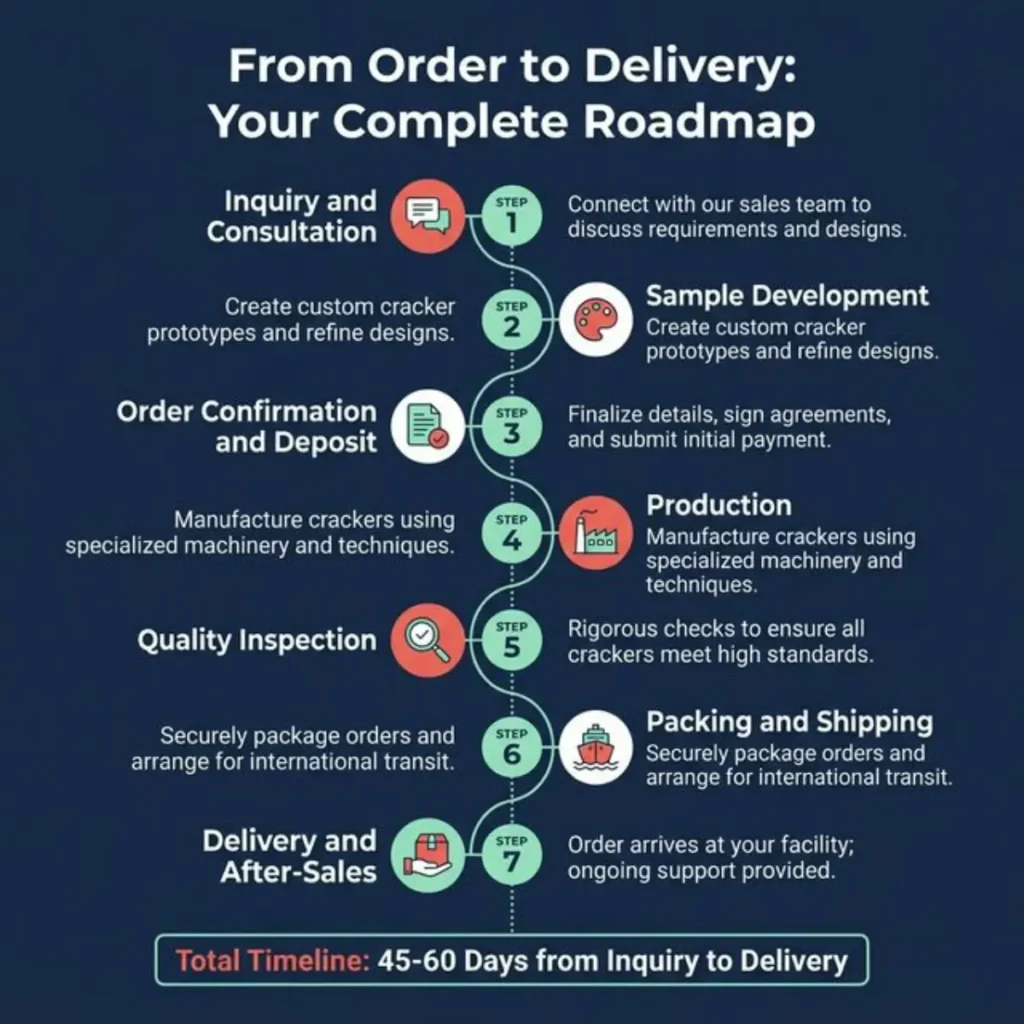
Step 1: Inquiry & Consultation — You share your design brief, quantity requirements, filler preferences, and target market. A dedicated account manager responds within 24 hours with a detailed quote and recommendations.
Step 2: Sample Development — Physical samples are created based on your approved brief. You review, request tweaks, and sign off. This typically takes 5–7 business days.
Step 3: Order Confirmation & Deposit — Finalise specifications, pricing, and delivery timeline. A 30% deposit locks in your production slot.
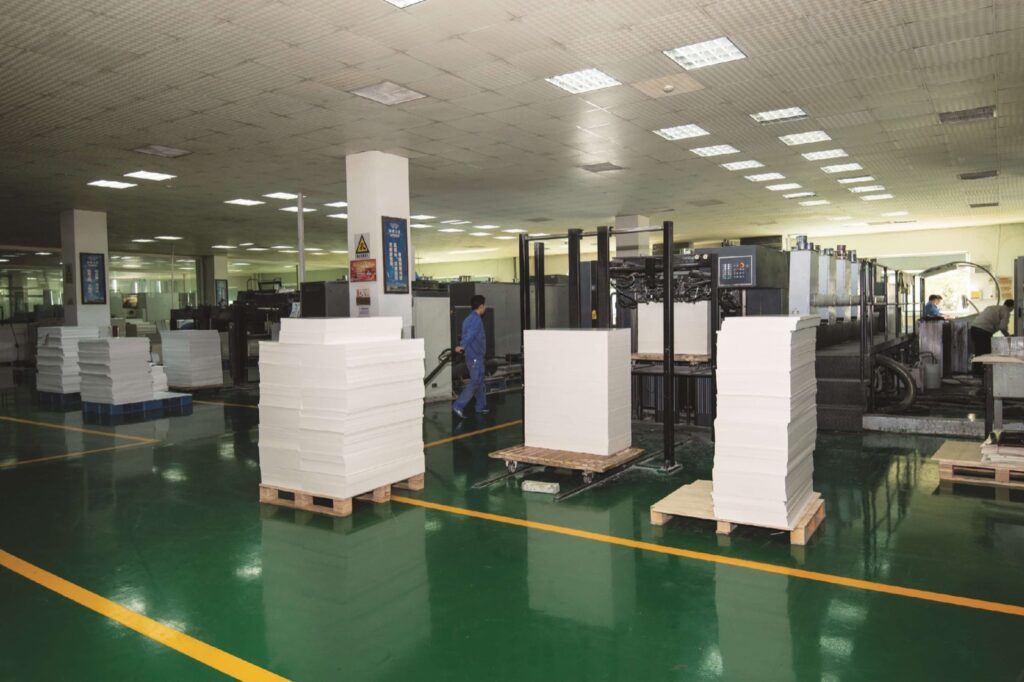
Step 4: Production — Your dedicated production line runs for 15–25 days depending on order volume. Real-time photo updates are sent at key milestones.
Step 5: Quality Inspection — In-line checks during production plus a final inspection before packing. A full QC photo report is sent for your sign-off. This multi-stage process covers material verification, snap mechanism testing, filler placement accuracy, and packaging integrity.
Step 6: Packing & Shipping — Export-grade carton packing with moisture protection. Whether you’re shipping LCL (Less than Container Load) or FCL (Full Container Load), all customs documentation, freight booking, and tracking are handled.
Step 7: Delivery & After-Sales — Goods arrive at your designated port or warehouse. Follow-up ensures everything meets expectations, and reorder support is ready when you need it.
Total timeline: Approximately 45–60 days from inquiry to delivery.
6. LCL vs. FCL: Choosing the Right Shipping Method
One of the biggest cost decisions you’ll make when importing Christmas crackers from a manufacturer is choosing between LCL and FCL shipping.
LCL (Less than Container Load)
- ✅ For qualified below-container projects after a product, packing and shipping review
- ✅ Lower upfront cost — you only pay for the space you use
- ⚠️ Longer transit time (shared container = multiple port stops)
- ⚠️ Higher per-unit shipping cost
- ⚠️ More handling = increased risk of damage for delicate items like crackers
FCL (Full Container Load)
- ✅ Best for 10,000+ units or repeat seasonal orders
- ✅ 30–50% lower per-unit cost compared to LCL
- ✅ Faster transit — direct route with no additional stops
- ✅ Your goods only — less handling, significantly reduced damage risk
- ⚠️ Higher upfront financial commitment
Our rule of thumb: First order or testing a new market? Start with LCL. Confirmed demand and reordering? FCL saves serious money. And if you’re between 5,000–10,000 units, ask your manufacturer about consolidated shipping — bundling your order with others heading to the same port gives you the best of both worlds.
7. Cost Factors: What Actually Affects the Price of Custom Christmas Crackers?
Understanding what drives pricing helps you make smarter sourcing decisions. Here are the six primary cost variables:
- Order Volume: The single biggest lever. Moving from a below-container project to a larger production run can materially reduce the per-unit cost.
- Cracker Size & Complexity: Standard 12-inch crackers cost less than oversized or unusually shaped designs. Multi-layered constructions (cracker-within-a-cracker) add cost.
- Filler Gift Value: A paper crown and joke cost pennies. A miniature bottle of gin costs significantly more. Your filler strategy directly impacts your landed cost.
- Packaging Type: A printed sleeve costs substantially less than a rigid gift box with embossing and a magnetic closure.
- Material Certifications: FSC-certified paper currently carries a 5–8% premium over conventional stock — a manageable uplift that increasingly pays for itself through retailer compliance and consumer preference.
- Shipping Method & Destination: As discussed in the LCL vs. FCL section, your logistics choice can swing total landed cost by 15–30%.
🔔 2026 Industry Note: Global kraft paper and cardboard prices have risen 8–12% since Q4 2025, driven by tightened EU deforestation regulations and increased demand for FSC-certified stock. Locking in your pricing early in the season (March–May) is strongly recommended before the next price adjustment cycle. 2026 Pulp & Paper Market Outlook – ResourceWise
8. Quality Control & Certifications: What to Look For
When sourcing Christmas crackers — a product that contains a small pyrotechnic snap — safety certifications aren’t optional. They’re a legal and commercial requirement in most markets.
Essential Certifications
- CE Marking: Required for products sold in the European Union Official EU Toy Safety Standards (including EN71).
- EN71: The European safety standard specifically for toys and children’s products — critical if your crackers contain any toy-based fillers.
- FSC Certification: Forest Stewardship Council certification for sustainably sourced paper. Increasingly required by UK and European retailers.
- ASTM F963: The US toy safety standard, relevant if selling crackers with toy fillers in the American market.
What a Robust QC Process Looks Like
A reliable manufacturer should provide multi-stage quality control including:
- Pre-production: Raw material and sample verification
- In-line inspection: Checks during active production runs
- Final inspection: Full product and packaging review before shipping, with a detailed photo report sent to you for sign-off
When Should You Start Ordering for the 2026 Holiday Season?
This is the question that separates experienced importers from first-timers.
| Timeline | Action |
|---|---|
| March – April | Begin design consultations and request samples |
| May – June | Finalize designs, confirm orders, lock in pricing |
| July – August | Production window (peak factory capacity) |
| September | Shipping and logistics |
| October – November | Stock arrives, ready for holiday retail season |
The biggest mistake first-time buyers make? Not starting early enough. If you need crackers for Q4 2026, the smart move is to begin sampling now to secure the best pricing and production slots before peak season demand hits.
Ready to Start Sourcing?
Whether you are planning a qualified below-container B2B project or custom Christmas crackers for a corporate event or 50,000 luxury Christmas crackers for a national retail chain, the process starts with a single conversation.
Get a free quote — tell us your design, quantity, and target market, and we’ll send a detailed proposal within 24 hours.
From traditional Christmas crackers to eco-friendly Christmas bon bons, from bespoke custom packaging to end-to-end holiday gift sourcing — we handle every detail so you can focus on growing your business.