
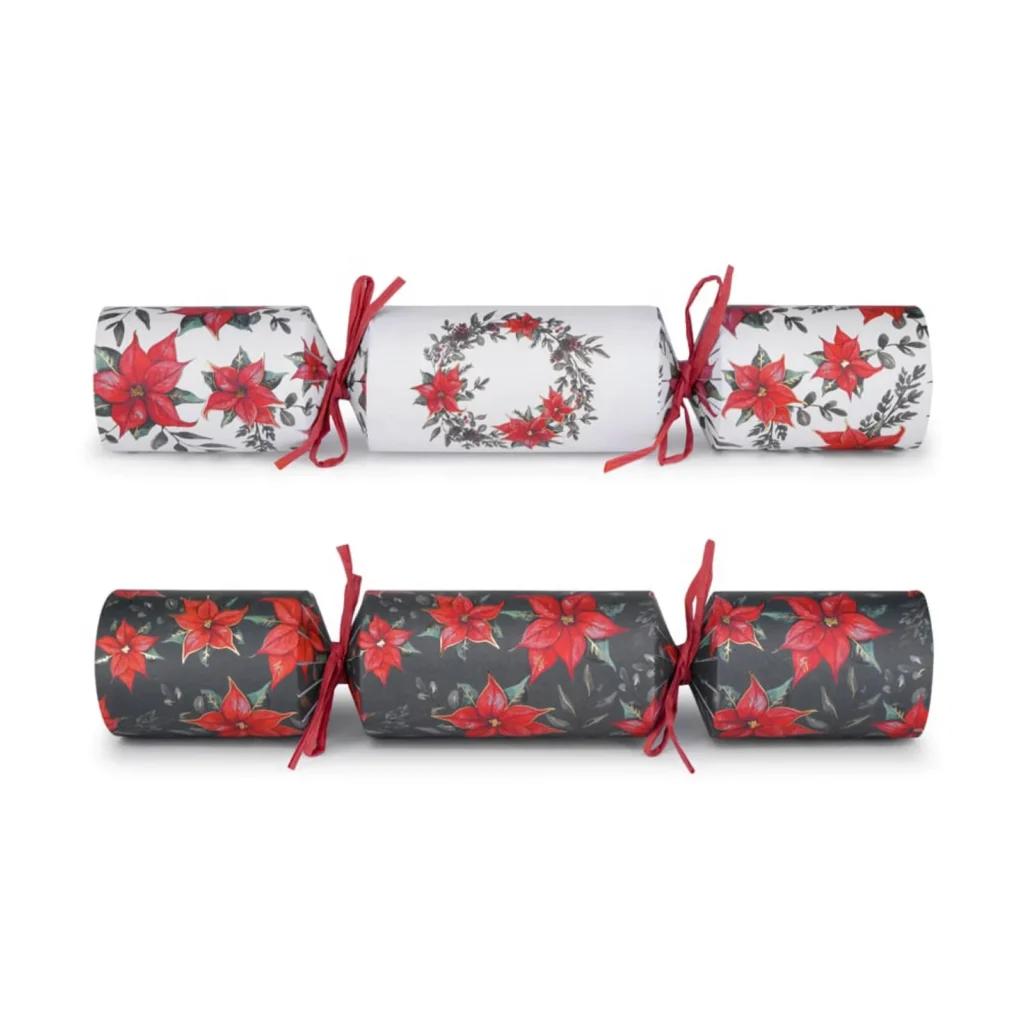
Private label Christmas crackers 2027 planning requires supermarket buyers to connect range strategy, product safety, artwork, packaging data, production capacity and store execution. The strongest programme begins with a defined shelf role for every SKU and a shared approval calendar, not a collection of unrelated decorative samples.
This guide is designed for major retail programmes. It expands on JollyCracker’s private-label manufacturing service by focusing on range governance, data and execution rather than repeating a landing-page overview.
Begin with three evidence labels
Trend language needs discipline. An Observed trend is a feature documented in a dated retail range or other identified source. Buyer interest is a request, enquiry or shortlisted direction that has not yet been validated by sales. A Confirmed bestseller requires the retailer’s own sales data or another explicit, verifiable source that confirms performance for the relevant market and period.
Do not turn repeated mood-board imagery into a bestseller claim. Keep an evidence column beside every proposed colour, finish, gift and pack type. The status can change as the programme develops, but the dated evidence note should remain visible to buying, design and sourcing teams.
Define the 2027 shopper mission
Decide which occasions the range must serve: a familiar family table, adult entertaining, children’s participation, gifting, a coordinated tablescape or a more formal celebration. One SKU can address more than one mission, but the full range should not rely on every pack trying to serve everyone.
Write the mission as an observable purchase reason. “Core family pack with clear contents and broad table appeal” gives design and product teams more direction than “festive”. Add the intended store format, online role, pack count, target user and Mass-market, Mid-range, Premium or Luxury position.

Use an Entry–Core–Image range architecture
An Entry–Core–Image structure, sometimes described as Good–Better–Best, gives every SKU a commercial job without publishing numeric commercial bands. Entry offers a clear, accessible proposition and disciplined materials. Core carries the broadest appeal and strongest seasonal volume expectation. Image expresses design leadership, a premium gift story or a distinctive presentation.
| Tier | Shopper promise | Typical design role | Control priority |
|---|---|---|---|
| Entry | Recognisable celebration with clearly stated contents | Focused print, efficient structure, broad colour story | Specification consistency and shelf clarity |
| Core | Balanced design, gift and presentation | Seasonal hero patterns with coordinated pack family | Availability, assortment discipline and data accuracy |
| Image | Distinctive table statement or refined gifting | Original artwork, elevated structure or curated gifts | Finish quality, story and photographic fidelity |
Do not build tiers by adding decoration mechanically. A foil-like effect, window or heavier board should earn its place through the proposition and remain compatible with sustainability requirements. Compare tiers through visible shopper value, not an internal process count.
Control overlap between designs
Create a range map with columns for mission, tier, colour family, artwork theme, pack count, cracker size, gift family, sustainability claim and channel. Two SKUs that occupy the same cells may compete without adding a new purchase reason. Merge them or give each a distinct job.
Range coherence does not require identical graphics. A shared colour bridge, illustration language, typographic system or packaging grid can connect Entry, Core and Image packs while letting each target a different table. Review the range at shelf distance as well as close up.
Lock contents before final structural artwork
The gift, hat, motto and snap determine the space inside the cracker. A late gift change can affect barrel diameter, crown folds, pack depth, finished weight, insert support and master-carton configuration. Approve production-intent dimensions and protective wrapping before finalising the dieline.
Use fixed, fixed-curated or controlled-assorted contents deliberately. A fixed-curated box contains a named set packed to a defined map. A controlled assortment uses approved item codes and ratios. An open random assortment creates difficulty for box copy, photography, inspection and customer service.
Treat the snap as a regulated component
Christmas cracker snaps may fall within pyrotechnic-article requirements in the destination market. GOV.UK guidance for the Pyrotechnic Articles (Safety) Regulations describes duties for manufacturers, importers and distributors in Great Britain. The responsible businesses must confirm classification, conformity, traceability, instructions and marking for the actual article.
Do not approve the snap through a generic supplier statement alone. Link the snap reference, manufacturing source and supporting documents to the finished SKU specification. A design or sourcing change should trigger a review of whether the approved evidence remains applicable.
Build shelf-ready packaging from the store task
Shelf-ready packaging should protect the consumer packs, move safely through distribution and allow store colleagues to identify, open and present the range efficiently. Begin with the retailer’s own requirements for tray or case format, opening method, facing count, maximum handling expectations and disposal.
Prototype the complete shelf-ready unit. Check opening force, exposed edges, pack retention, front visibility, replenishment, stacking and the removal of the final consumer pack. A perforation that works on an empty sample may tear differently when the case has crossed the intended distribution route.
Give every packaging level accurate data
GS1 UK explains that a Global Trade Item Number identifies an item at a packaging level and supports information sharing across physical and digital channels. The retailer or brand owner should assign GTINs through its authorised process and decide when a consumer unit, inner, shelf-ready case or other trade item needs identification.
EAN is a barcode-carrier term often used in retail conversations, while the underlying identification number is a GTIN. Supply the approved symbol artwork at the right magnification and quiet zones, then verify it on printed production material. Do not stretch a barcode to fit a late artwork change.
Outer-carton information needs its own brief
The master carton and shelf-ready case may need item description, retailer SKU, GTIN or logistics label, quantity, variant, orientation, handling marks, carton sequence, gross and net information where required, dimensions and destination details. Confirm the retailer’s data template rather than copying consumer-pack information.
Match the printed carton, advance shipment data and physical contents. When several designs share similar boxes, add clear warehouse-facing identification that does not depend on subtle artwork colour. Retain a photographed reference for inbound and inspection teams.
Design the consumer pack for shelf and online use
The front should communicate brand, pack count, range tier and design quickly. The back or side needs enough space for accurate contents, variations, responsible business information, warnings, materials or disposal guidance and barcode placement as applicable. Required information should remain legible at final size.
Online images should show the actual retail unit, scale, cracker count and guaranteed contents. If gifts are assorted, state that near the image rather than hiding it in general copy. Give ecommerce teams pack-front, pack-back, detail and contents assets from the approved production specification.
Make sustainability data-ready
UK extended producer responsibility guidance requires affected organisations to understand and report packaging data, with detailed guidance and a recyclability assessment methodology available for relevant reporting years. Buyers should identify which organisation owns reporting decisions and which packaging-level data the manufacturer must supply.
Create a component bill of materials for cracker, hat, motto, snap, gift wrap, consumer box, window, insert, shelf-ready pack and master carton. Record material category, weight method, coating, certification claim, supplier evidence and destination disposal wording. Keep EPR reporting, retail claims and FSC trademark approval as related but separate workstreams.
Use environmental claims with evidence
The Green Claims Code says environmental claims should be clear, accurate, substantiated and should not hide important information. Define whether “plastic-free”, “recyclable” or recycled-content wording covers a component or the whole pack. Review coatings, windows, laminates, adhesives and gift protection before approving the claim.
FSC chain-of-custody certification supports controlled claims for forest-based materials through certified supply chains. If an FSC label is planned, identify the certified organisation responsible for its use, verify the product group and approve the exact artwork. A paper supplier’s certificate does not automatically authorise a finished-product label.

Reserve 2027 capacity through decisions, not promises
Major programmes benefit from early alignment because artwork, specialist papers, gifts, testing, print, assembly, inspection and shipping draw on different resources. Early discussion does not guarantee a fixed production or delivery date. Capacity is meaningful only when the manufacturer has an actionable scope and confirms it in the agreed order process.
Provide a range forecast, design count, quantities, pack formats, destinations, gift direction, compliance responsibilities and target launch window. Mark what is fixed and what remains provisional. JollyCracker can then identify decision deadlines, long-lead dependencies and alternative sequences through volume programme planning.
Create an approval calendar with gates
- Range architecture and shopper missions approved.
- Technical brief, destinations and responsible businesses confirmed.
- Gift families, snap route and material claims screened.
- Structural cracker, consumer pack and shelf-ready format approved.
- Artwork, GTIN allocation, copy and carton information checked.
- Production-intent samples and required documentation approved.
- Production, inspection and shipping plan confirmed.
- Final product data and ecommerce assets released from the same reference.
Assign one owner and one latest-decision date to each gate. A sample can be visually approved while compliance documents remain open; the tracker should show both statuses. Avoid using “approved” without naming what has actually been approved.
Plan inspection around the range promise
The inspection specification should cover print, colour, dimensions, crown formation, snap placement, gift identity, collation, pack count, barcode readability, box assembly, shelf-ready configuration and outer-carton marks. Define critical, major and cosmetic issues in terms relevant to the product.
Use approved references for every tier and variation. For a curated set, confirm completeness at retail-box level. For an assortment, verify only approved item codes and the agreed ratio at the defined control level. Document how repaired or replaced units re-enter the line.
Connect shipping format to product risk
Assembled supply protects store-readiness but requires efficient retail and master-carton engineering. Flat-packed or partially assembled solutions change labour, instructions, component counting and responsibility after arrival. The correct route depends on volume, gift, packaging, destination, handling and the buyer’s operating model.
Do not publish a universal container quantity before the final pack is known. Retail boxes, gift dimensions and master-carton orientation materially affect loading. Review packing and shipping options after structural approval, then update the planning assumptions.
What the manufacturer brief should contain
- Retailer, markets, channels and intended launch window.
- Entry, Core and Image SKU map with pack counts and missions.
- Forecast quantities, design splits and priority SKUs.
- Gift, hat, motto, snap and assortment requirements.
- Consumer pack, shelf-ready pack and master-carton standards.
- GTIN ownership, barcode artwork and data-delivery requirements.
- Compliance, certification, environmental-claim and EPR data owners.
- Artwork, sample, inspection, shipping and change-control contacts.
Questions to resolve before the first sample
Which SKU is expected to carry the broadest volume? Which one creates the range image? Are any contents genuinely Confirmed bestsellers for this buyer, and what data supports that status? Which observed features are only hypotheses? How will online and store assortments differ, if at all?
Who assigns product identifiers? Who signs off snap documentation, gift safety, artwork copy, sustainability data and packaging claims? Does the shelf-ready unit have to present immediately after opening? Which changes require a new sample, barcode review, claim review or capacity re-confirmation?
Run a cross-functional pre-production review
Before material release, bring buying, technical, packaging, design, ecommerce, supply chain and the manufacturer into one structured review. Work from the same SKU table and production-intent samples. Each function should confirm its data and unresolved points rather than approving a separate version in isolation.
| Function | Final questions |
|---|---|
| Buying | Does every SKU still have a distinct range role and approved quantity? |
| Technical | Are snaps, gifts, warnings, traceability and documents linked to the final version? |
| Packaging | Are retail, shelf-ready and transport structures approved and measured? |
| Ecommerce | Do titles, contents, variations and images match the physical product? |
| Supply chain | Are carton data, labels, orientation, routing and inspection instructions complete? |
| Manufacturer | Can approved materials, processes and sequence support the confirmed programme? |
Record conditional approvals explicitly. For example, a print proof may be accepted subject to barcode verification, or a gift may be accepted subject to receipt of the destination document. Conditions need owners and closure dates before the affected operation starts.
Prepare store and ecommerce teams from the same pack truth
Create a single approved product-information pack for store operations, customer service and digital teams. It should explain pack count, guaranteed or assorted gifts, pull and use instructions, relevant warnings, materials, disposal guidance and how to identify a production lot. This reduces the chance that promotional copy contradicts the physical item.
For shelf-ready cases, provide an opening image and correct facing. For online teams, provide a contents image and an accurate variation note. For customer service, provide a concise contents matrix and escalation route. Do not circulate pre-production renders after a component has changed.
Close the 2027 loop with post-season evidence
Agree the data to collect before launch: availability, damage, returns, content-related questions, store feedback, online review themes, assortment complaints and sales by SKU where the retailer can share them internally. Connect operational issues to the exact pack revision and production lot.
At the range review, decide which features remain Observed trends, which Buyer-interest concepts should be tested again and which SKUs qualify as Confirmed bestsellers under the retailer’s evidence standard. A design can sell well but create excessive damage; another may sell steadily and provide excellent operational performance. Use both commercial and product evidence when shaping the next architecture.
Feed measured carton data, proven materials, approved gift references and defect learning back into the next brief. Reuse knowledge, not stale artwork. Regulations, marketplace requirements and retailer standards should still be checked again for the new season.
Pre-approve proportionate fallback routes
A major range should identify where a simpler fallback is acceptable before a problem occurs. Examples may include removing a non-essential decorative process, using an approved paper sleeve instead of direct gift marking, or reducing artwork variants while keeping the Core shopper promise. Every fallback still needs technical, claim and artwork approval.
Record what cannot change: snap reference, required gift function, product identity, pack count, responsible-business information, safety wording and retailer data. A fallback should protect the proposition and programme integrity, not create an unreviewed lower specification. Capacity and timing must be reconfirmed after the actual change is known.
Planning a 2027 supermarket range? Review JollyCracker’s retailer programme, custom design workflow and factory process, then send the team your range architecture and approval calendar.