
There is no universal list of the ten best-selling Christmas crackers. A supermarket, luxury department store, corporate-gift supplier and online marketplace serve different customers, price positions and pack formats. Any supplier that presents an unsupported global ranking is giving the buyer a marketing list, not a range plan.
How This List Defines “Best-Selling”
This is a planning list of commercial range concepts, not an unsupported global sales ranking. Buyers should validate each idea against their own full-price sell-through, margin, returns, reviews, stock-outs and channel requirements.
10 Wholesale Christmas Cracker Ideas at a Glance
For 2026 wholesale buying, “best selling” should mean a concept with a clear customer, price role and reason to purchase—then validated against your own sell-through, margin, return and review data. The ten concepts below are commercial range roles, not claimed sales rankings. Use them to identify gaps, brief a factory and build a balanced container programme.
1. The recognisable seasonal core
A classic red, green, gold or tartan set provides an accessible centre to a broad retail range. Its job is not to look experimental; it is to communicate “Christmas crackers” immediately, photograph clearly and sit comfortably in a familiar price band. Differentiate through disciplined artwork, reliable contents and a well-proportioned box rather than adding every available finish.
This can be the volume anchor because the design is less dependent on a narrow trend. Ask whether the structure, tube size and carton can be shared with other SKUs to improve manufacturing and loading efficiency.
2. The reduced-plastic paper-led option
This range role serves buyers with material policies and customers who look beyond appearance. Define which components are paper-based, which plastic components have been removed and what documentation supports forest-source or recycling claims. An FSC label requires the appropriate chain of custody; the FSC explains how certified material is tracked through the supply chain.
Do not duplicate the same product under several green names. Create one well-specified proposition, then direct technical sourcing to the eco-friendly cracker programme.
3. The private-label brand signature
A custom logo is not a complete private-label product. A strong brand signature carries the retailer’s design language through paper, typography, colour, gifts, box structure, warning layout and e-commerce imagery. It should be recognisable without making every surface a logo panel.
This role is appropriate when the buyer needs differentiation from open-market catalogue stock and can plan artwork, samples and production early. For an own-brand programme covering artwork, product identification and retail packs, use JollyCracker’s private-label manufacturing service.
4. The premium metallic table set
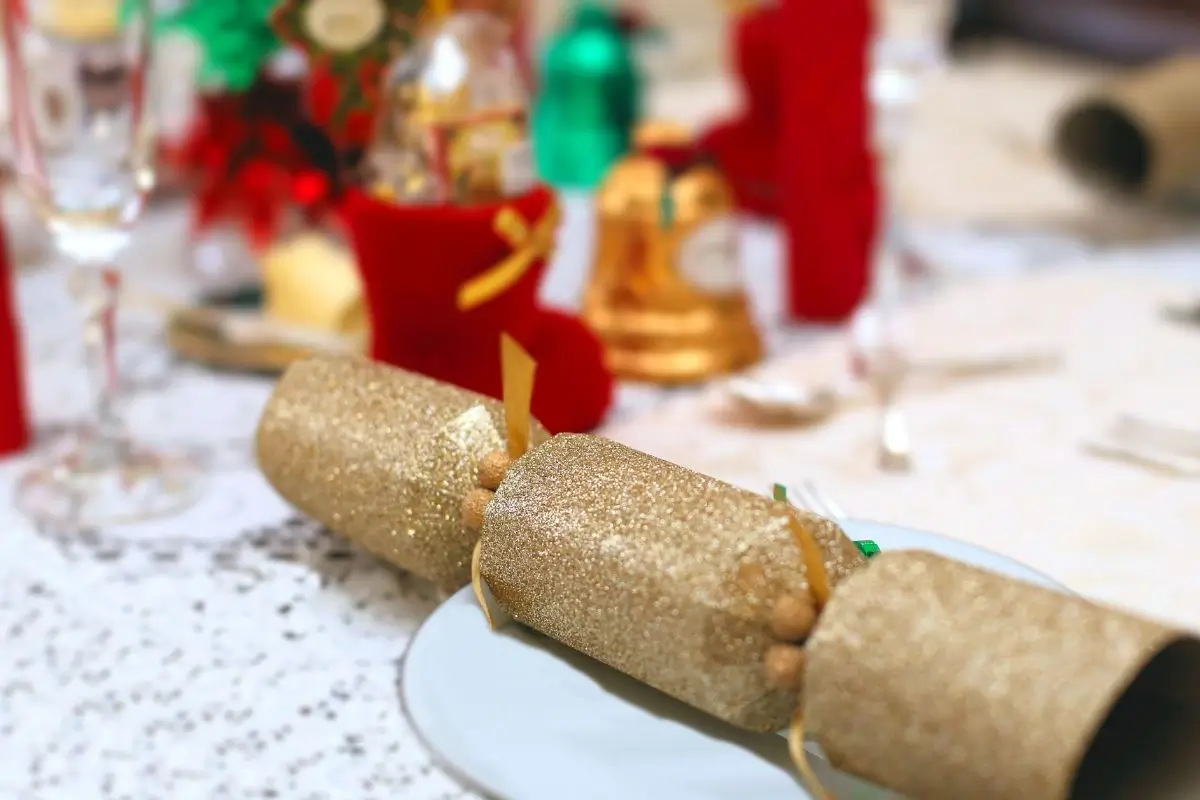
A premium set uses controlled metallic details, stronger board, considered ribbons and better gifts to create a visible step up from the core range. The key word is controlled. Full foil, multiple ribbons and an elaborate insert can raise cost and packing complexity without improving perceived value.
Approve physical samples because screens cannot show foil consistency, colour under warm light, ribbon handle or box rigidity. Keep this concept separate from the luxury quality guide, which explains the specification and QC decisions for genuinely high-end programmes.
5. The family game set
Family game crackers can offer more lasting value than six unrelated trinkets. The box might contain a complete quiz, charades sequence, table challenge or set of conversation cards. The buyer should be able to explain how the six crackers work together.
Specify language, reading level, play time, number of players and answer control. If physical game pieces are intended for children, confirm age grading, warnings and test documentation. In Great Britain, the official toy safety guidance describes manufacturer and importer obligations; requirements differ by destination.
6. The children’s age-defined set
“Kids’ crackers” is too broad for a buying specification. The product needs an intended age group, content policy, warning plan and target market. Gifts for older children may be unsuitable for those under three, and one report cannot automatically cover every colour, material or item in an assorted box.
Build compliance into selection rather than testing an arbitrary gift after artwork is finished. In the United States, the CPSC small-parts guidance explains relevant bans and choking-hazard labelling. The importer should identify all requirements for the final configuration and market.
7. The useful-gift cracker
This concept replaces generic novelty items with a coherent set of practical accessories. A kitchen, stationery, travel or home theme can suit specialty retailers and make the contents easier to communicate on the pack. The gift should have adequate finish and function; “reusable” is not meaningful if it fails immediately.
Choose contents before locking the tube diameter and pack depth. Ask for item dimensions, materials, intended use, testing route and assortment map. See custom gifts and fillers for product-led development.
8. The novelty conversation starter
A distinctive shape, theme or interaction can attract attention online and on an endcap. Its role is discovery rather than the entire range. Keep the proposition understandable from the front of the box and avoid licensed characters unless rights, territories, approvals and timing are secured.
Give a novelty concept a measured initial depth unless your own historic data supports a larger buy. The novelty cracker wholesale guide covers concept selection, sampling and assortment controls in detail.
9. The hospitality-ready programme
Hotels, restaurants and event groups need efficient distribution, clean table presentation and carton labels that make sense to venue teams. The product may use a common format with different property names or colourways. Loose glitter, weak bows and oversized structures can cause more operational difficulty than their display value justifies.
The commercial advantage comes from solving allocation and service, not merely printing “hotel” on the artwork. Specify venue count, place settings, reserve stock, delivery points and inner-pack quantities before quotation.
10. The luxury gift-and-pack statement
A luxury SKU gives the range an upper anchor. It should combine a substantial cracker, precise finishing, genuinely better contents and retail packaging that protects the product. If only the outer paper changes, the item is premium-looking rather than a complete luxury proposition.
This role can be bought more selectively, but its quality expectations are high. Define acceptable tolerances, inspect the first production output and agree how visible finish defects will be classified.
Turn the ten concepts into a commercial SKU architecture
Do not order all ten because they appear on a list. Start with the customer groups and price positions that matter to your channel. Give every proposed SKU a written role: traffic, core volume, step-up, specialist use, brand statement or test. If two products have the same customer, look, gift value and price, they may be duplicates.
Create a line review with the following columns:
- customer and occasion;
- price and margin role using the buyer’s own target model;
- pack count, cracker size and retail-box footprint;
- design story and gift proposition;
- compliance and environmental evidence required;
- forecast, reserve or test quantity and reorder feasibility;
- carton volume and container-planning impact.
Use your own data to decide what is “best selling”
Units sold alone can reward heavy discounting or excess availability. Review full-price sell-through, gross margin after markdown, return reasons, damaged stock, review themes and stock-outs. Compare like periods and note when a product launched late or had less distribution. Online search and click data can reveal interest, but completed sales and returns show whether the proposition worked.
For a new market with no history, use channel interviews, competitor price architecture and controlled test depth. Record the assumptions so the post-season review can improve the next programme. Never turn a design forecast into a published sales statistic without evidence.
Adjust the range by channel
A design can perform very differently according to where it is sold. Supermarkets may need immediate recognition, efficient shelf use and clear price steps. Department stores can support more storytelling, gifts and presentation. Specialty retailers benefit from themes aligned with their category. Online sellers need a pack that photographs clearly, survives parcel fulfilment and explains contents without being handled.
Create a channel matrix before assigning forecasts. Mark which SKUs will be exclusive, which can travel across channels and which need different pack counts or imagery. If the same product appears at conflicting prices through several customers, the resulting markdown pressure can damage the programme. A controlled variation in colour, gift set or pack size can provide differentiation while keeping the manufacturing platform common.
Run a disciplined post-season review
Within each SKU, record opening stock, receipts, full-price units, promotional units, final stock, returns, damage and customer-service themes. Separate supply problems from product preference: a late delivery or under-allocation can make a strong product appear weak, while deep discounting can make a weak proposition appear to have high unit sales.
Photograph the actual shelf and e-commerce presentation, and compare it with the approved range plan. Note whether the front panel communicated pack count and contents, whether gifts matched expectations and which packaging defects reached customers. Convert the review into actions—repeat, revise, reduce, replace or test—then attach those decisions to the next factory brief. This is how an evidence-based “best-selling” range becomes more accurate each season.
Consolidate production without making every SKU identical
A well-designed range can share tubes, snaps, certain papers, box footprints and master cartons while retaining different artwork and gifts. Component commonality can simplify approvals, QC and container loading. It also reduces the risk created by ten one-off constructions that each require separate tooling and packing methods.
JollyCracker’s container-load and volume order programmes are planned around product dimensions, cartons, assortment and destination rather than a headline unit number. Provide the forecast by SKU so the factory can model the programme as a whole.
Build your 2026 wholesale cracker range
JollyCracker supports established retailers, distributors and private-label buyers from range brief and sampling through production, QC, retail packing and container loading. We will not claim that a concept is a best seller without your channel evidence; we will help turn the evidence and commercial target into a manufacturable range.
Review the Christmas cracker product ranges, then request factory pricing with your channel, target markets, planned SKUs, pack formats, forecast and delivery window.
Wholesale Christmas Cracker Buyer FAQs
What Christmas crackers sell best?
There is no universal global ranking. Strong products match a defined customer, channel and price role, then prove demand through the buyer’s own sell-through, margin, returns and review data.
Which Christmas crackers suit wholesale retail ranges?
A balanced wholesale range can combine a recognisable core with selected private-label, family, useful-gift, novelty or luxury concepts.
How should buyers validate a best-selling claim?
Check comparable sell-through, gross margin after markdown, returns, damage, reviews, stock-outs and distribution.
Which concepts suit supermarkets, luxury retail and hospitality?
Supermarkets need recognition and efficient packs; luxury retail supports stronger gifts and presentation; hospitality prioritises table appearance and allocation.
How many SKUs should a wholesale range include?
There is no fixed number. Every SKU should have a distinct customer, price or channel role, without unnecessary duplication.
When should buyers begin development?
Begin early enough for briefing, artwork, gift selection, compliance review, samples, production, inspection and freight before the selling season.