
Christmas cracker packaging has three commercial jobs: make the range easy to understand, protect its presentation through the supply chain and carry the information needed to sell responsibly. A box that looks impressive but wastes shelf space, collapses in transit or creates avoidable compliance work is not effective packaging.
This 2026 guide explains how retail buyers and private-label teams can develop packaging that supports sales without relying on unverified claims about guaranteed conversion or margin. The right decision comes from the product, customer, channel, logistics and evidence behind each claim.
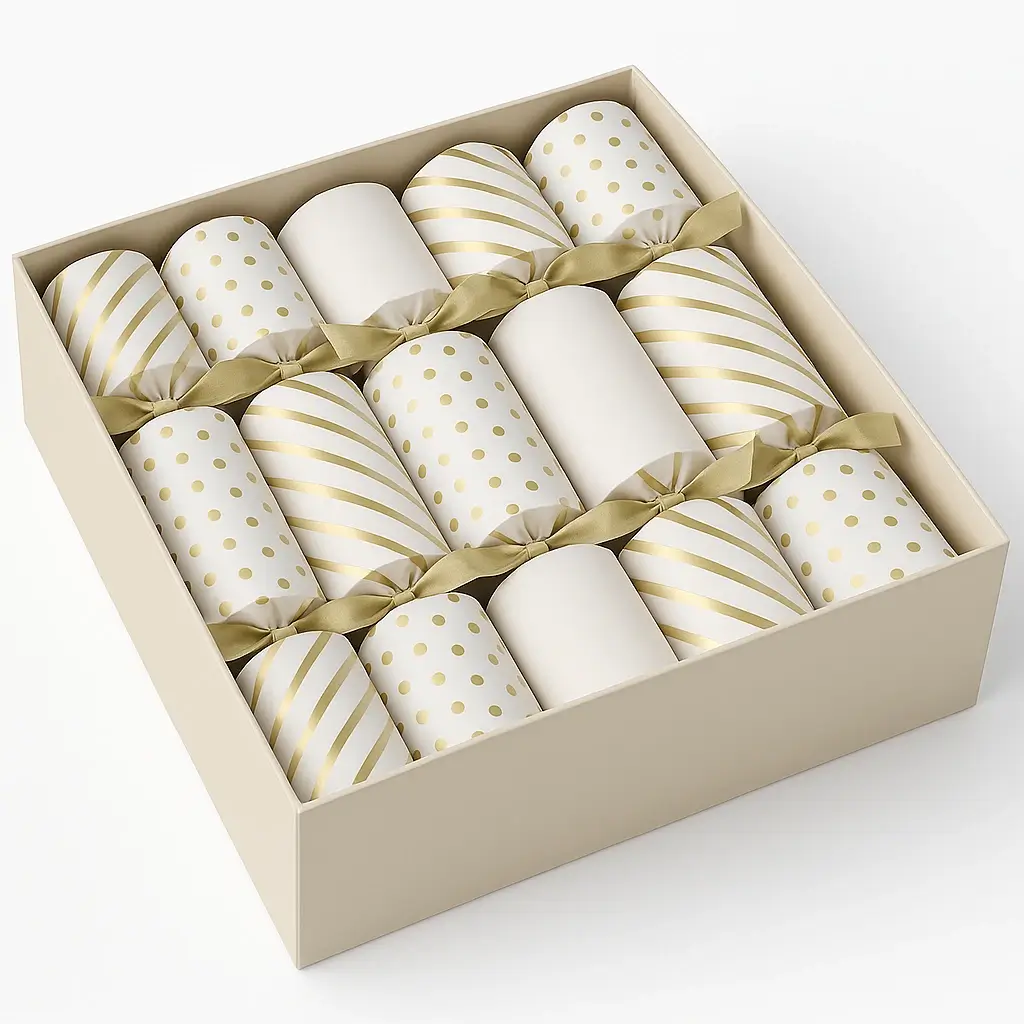
Packaging Communicates the Product Before It Is Opened
Shoppers cannot test the snap, unfold the hat or inspect every gift at the shelf. They use visible signals to decide what the product is and whether it suits the occasion. Pack structure, imagery, colour, finish, copy and gift descriptions should make four points clear:
- how many crackers are included;
- whether the style is traditional, contemporary, luxury, playful or environmentally considered;
- what type of gifts and experience the pack contains;
- why this product is different from nearby alternatives.
Clarity is more valuable than decoration alone. If the box has a premium finish but hides pack count, size or gift information, it may create hesitation. Build a visual hierarchy that works at shelf distance and in a small e-commerce image.
Design Packaging Around the Sales Channel
Physical retail
Confirm shelf width, depth, height, hanging or stacking method and the number of facings. Test whether the front panel remains visible when units are stacked and whether the box stands square after transport. Case packs should support efficient replenishment and avoid leaving incomplete quantities at store level.
E-commerce
The retail box must photograph well, but it also needs protection inside a courier parcel. Long cracker packs can be vulnerable to corner damage and bending. Conduct transit trials using the intended fulfilment carton, void fill and carrier conditions. Product photography should show scale, pack count, cracker design and representative gifts without implying contents that are not included.
Hospitality and events
A consumer-facing presentation box may add little value when crackers are unpacked centrally and placed on tables. Hospitality buyers may benefit from simpler inner packing, clear venue allocation and cartons that are easy for staff to handle. The product itself can still look premium. See the hotel and event cracker programme for channel-specific considerations.
Corporate gifting
Packaging may carry a campaign message, recipient name, event date or QR code. Confirm data handling and personalisation processes where variable information is used. If the pack will be mailed individually, design the presentation box and shipping protection together.
Choose a Structure Before Creating Artwork
A structural sample tests dimensions, board behaviour, opening, product fit and assembly without the distraction of final graphics. Common options include folding cartons, sleeves, window boxes, book-style packs and rigid presentation boxes. The appropriate format depends on target value, pack count, protection and distribution method.
Place actual crackers and gifts into the sample. Check that ends are not compressed, finishes do not rub, ribbons remain presentable and products do not shift excessively. Ask production staff to assemble several boxes; a structure that only a packaging engineer can close neatly will create inconsistency at scale.
JollyCracker’s custom packaging service covers the relationship between box structure, print and presentation. Approve the dieline before final artwork, then lock the dieline version into the specification.
Use Materials and Finishes With a Purpose
Board grade should be selected for structure, print result and supply-chain performance. A heavier board is not automatically better if it increases material use without improving protection. Ask for material samples and test the finished form.
Foil, embossing, spot coatings, textured papers and windows can create useful focal points. Each also affects cost, lead time, recyclability assessment and production control. Use a finish to highlight the brand, product name or one premium cue rather than covering every surface.
For a value-led range, strong typography, colour blocking and disciplined artwork can create shelf impact without complex finishing. For a luxury range, tactile board, controlled foil and a carefully engineered opening experience may support the proposition better than a large volume of decorative material.
Packaging Protects Revenue as Well as Product
Damaged packaging can make a fully functional product unsaleable. Protection should be designed across three levels: the cracker itself, the retail pack and the master carton. Consider compression, vibration, moisture, abrasion, drops and repeated handling at ports, warehouses and stores.
- Use inserts or controlled fit to prevent movement without crushing cracker ends.
- Keep delicate foils or windows away from predictable rub points.
- Specify master-carton board, closure and maximum weight.
- Validate carton quantity and orientation with actual retail packs.
- Agree palletisation, container loading and moisture controls where relevant.
- Inspect retail packs and master cartons before shipment.
For assembled, flat-packed and container-loading choices, use the Christmas cracker packing and shipping guide. The safest and most efficient method depends on the product construction and route.
Packaging Determines Logistics Efficiency
Christmas crackers are often constrained by volume rather than weight. A small change to box depth, product orientation or pack count can alter master-carton dimensions and container utilisation. Request a packaging data sheet before final approval showing:
- retail-pack dimensions and gross weight;
- units per master carton;
- master-carton dimensions, gross and net weight;
- cartons per pallet if pallets are required;
- estimated units and cartons per container for the specified mix;
- assumptions about floor loading, pallets and allowable clearance.
Do not treat a loading estimate as guaranteed until the finished packaging is measured. Mixed-SKU containers require a loading plan that accounts for carton dimensions, weights and delivery priorities. Container-load programmes usually provide the clearest handling route; qualified below-container orders need an explicit consolidation and risk review.
Make Information and Traceability Part of the Layout
Reserve space for required and commercially important information before decorating every panel. Depending on the product and market, this may include the product name, contents, quantity, warnings, age information, manufacturer or importer details, batch reference, barcode, material information and disposal guidance.
UK product-safety guidance emphasises appropriate labelling, safety information and traceability. The product or packaging should allow relevant businesses and production batches to be identified. If a gift is subject to product-specific legislation, its warnings and conformity information must be considered alongside the cracker packaging, not hidden by it.
Barcode placement should be tested on finished material and at realistic curvature or seam positions. QR codes should lead to a maintained destination and include a useful visible explanation; they should not replace mandatory information unless the applicable rules expressly permit it.
Use Environmental Claims Precisely
“Eco-friendly”, “plastic-free”, “recyclable” and “FSC certified” are different claims. Define the component and evidence behind each statement. A paper box may include windows, laminates, foil, magnets, adhesives or inserts that affect disposal and recyclability. Ask suppliers for a component-level material declaration rather than relying on the appearance of kraft paper.
FSC explains that its chain-of-custody system verifies eligible forest-based material through the supply chain and controls label and transaction claims. If an FSC label is planned, verify the certificate scope and actual product claim, and obtain the necessary trademark approval. Do not copy a logo from another pack.
UK organisations that supply or import packaging may also be affected by extended producer responsibility for packaging. Current GOV.UK EPR guidance covers who is affected, data reporting, fees and recyclability assessment. Buyers should establish their role and reporting obligations with an appropriate compliance specialist; the overseas factory cannot determine them from packaging artwork alone.
Test Packaging Against Measurable Criteria
- Structural check: dimensions, fit, opening, closure and assembly sequence.
- Graphic check: artwork version, colour references, legibility, barcode and finish registration.
- Product protection: movement, crushing, rubbing and representative transit handling.
- Production trial: repeatable assembly using line methods and actual components.
- Pre-shipment inspection: pack count, assortment, labelling, carton condition and shipping marks.
Agree tolerances and defect classifications before mass production. A subjective instruction such as “premium quality” cannot guide the line or settle an inspection decision. Use approved samples, measurable dimensions and photographs of acceptable and unacceptable conditions.
Measure Packaging Performance After the Season
Instead of claiming that a new box automatically increases sales, collect your own evidence. Review sell-through by SKU, returns, damage, customer questions, online reviews, warehouse complaints, store feedback and markdowns. Compare products only where price, placement and promotion make the comparison meaningful.
Keep an annotated production sample and a packaging data sheet. For the next season, record which finishes caused delays, which panels confused customers, which carton sizes handled well and which claims required extra evidence. This converts packaging from an annual artwork exercise into a repeatable product-development process.
Develop Packaging for a Scalable Cracker Programme
Send JollyCracker your cracker dimensions, pack count, sales channel, shelf or parcel constraints, brand guidelines, target market, delivery window and expected volume. We can review cracker fit, structural options, artwork preparation, master cartons and container loading together, then identify the samples and evidence required before production.